Flash
A payments app in Egypt. I've been a senior product designer here since April 2025.
2025 to now · Senior product designer
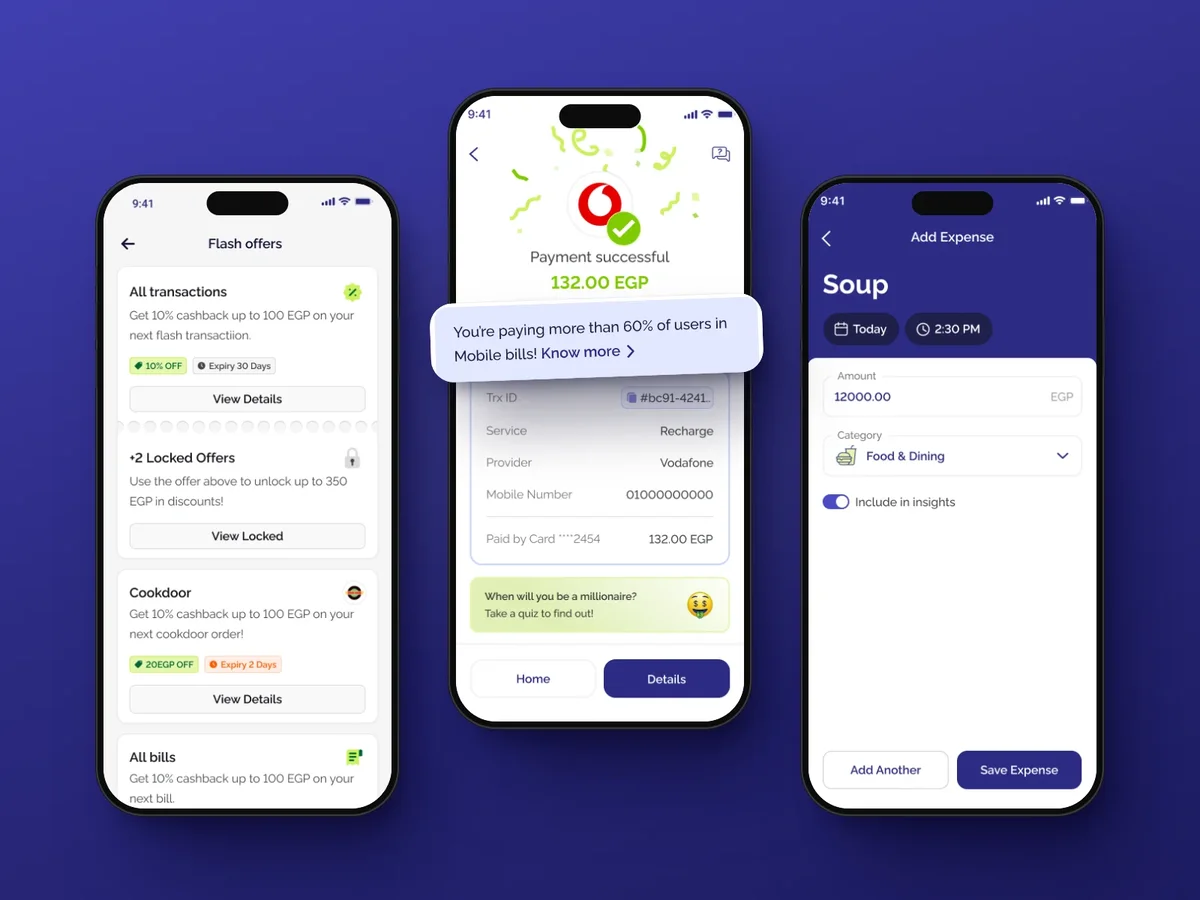
I design the bill payments and money tracking parts of the app. I also designed the wallet's transfer flow, and audited the bill payment and web checkout flows. Since September 2026 I've owned Flash Rewards end to end, as its designer and PM, business side included.
Flash Rewards
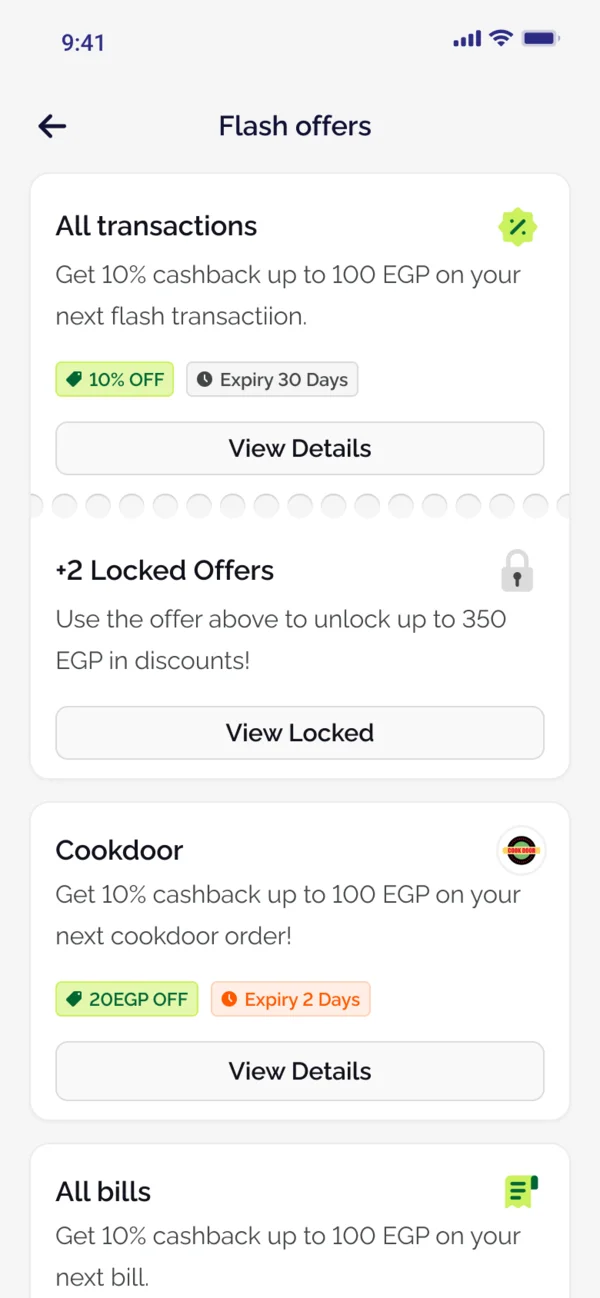
Flash Rewards are offers that merchants pay for. Customers find them in the app and use them when they pay at the shop with Flash. It started as a pilot in spring 2026 and is now live across Flash's food and drink merchants.
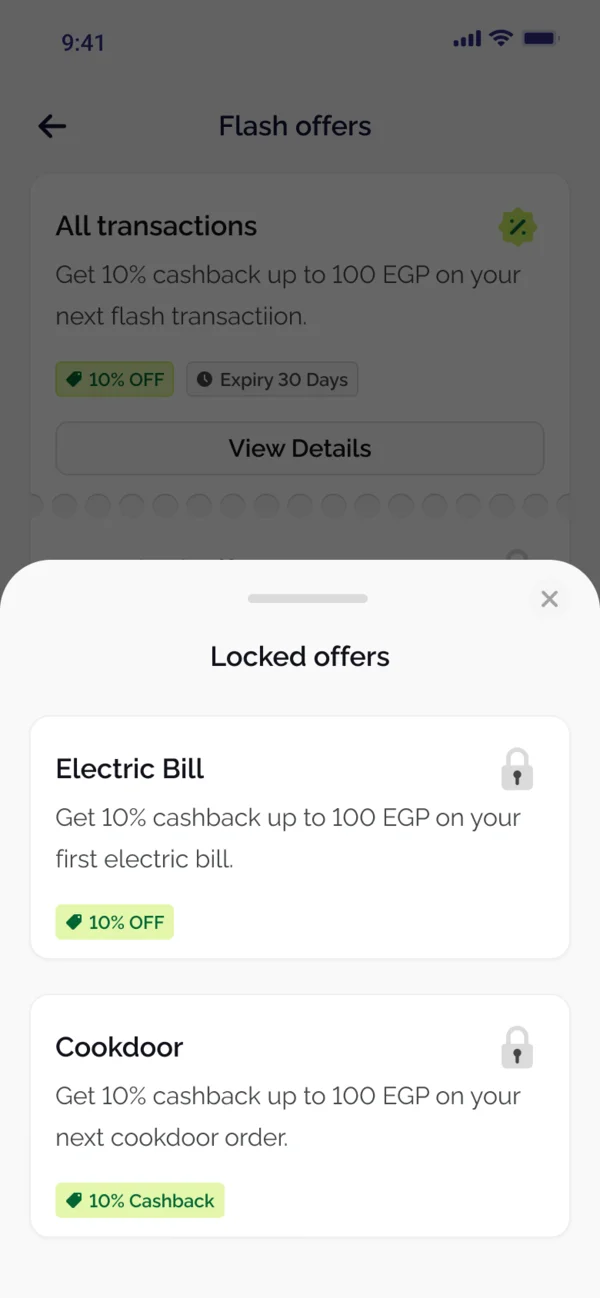
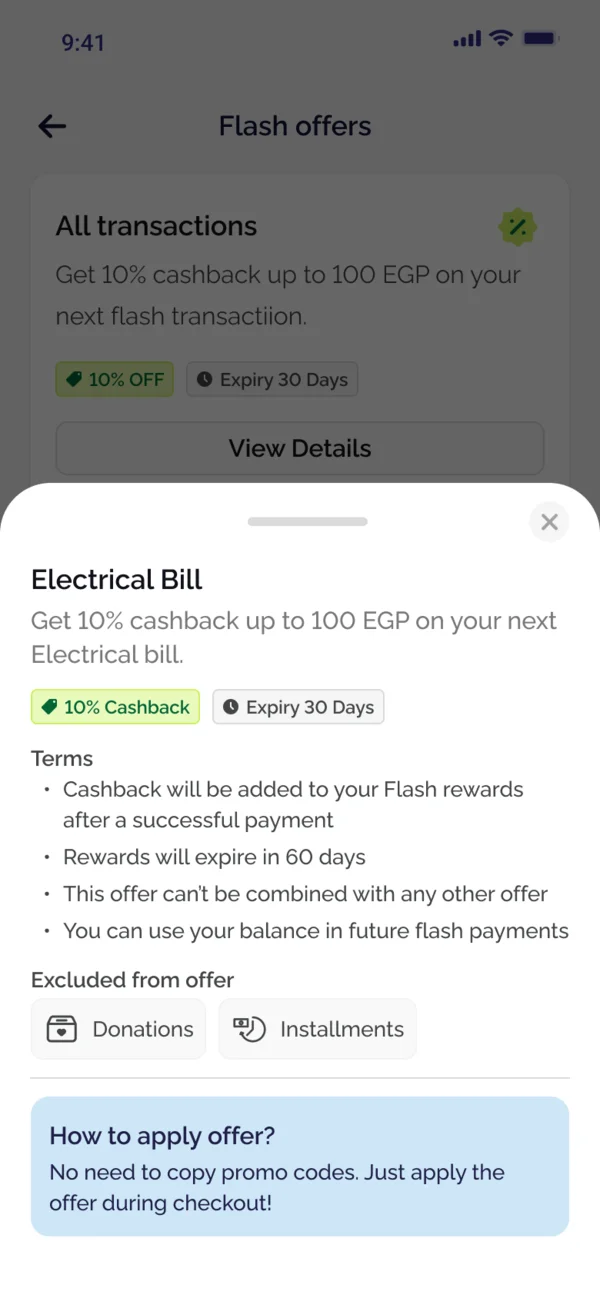
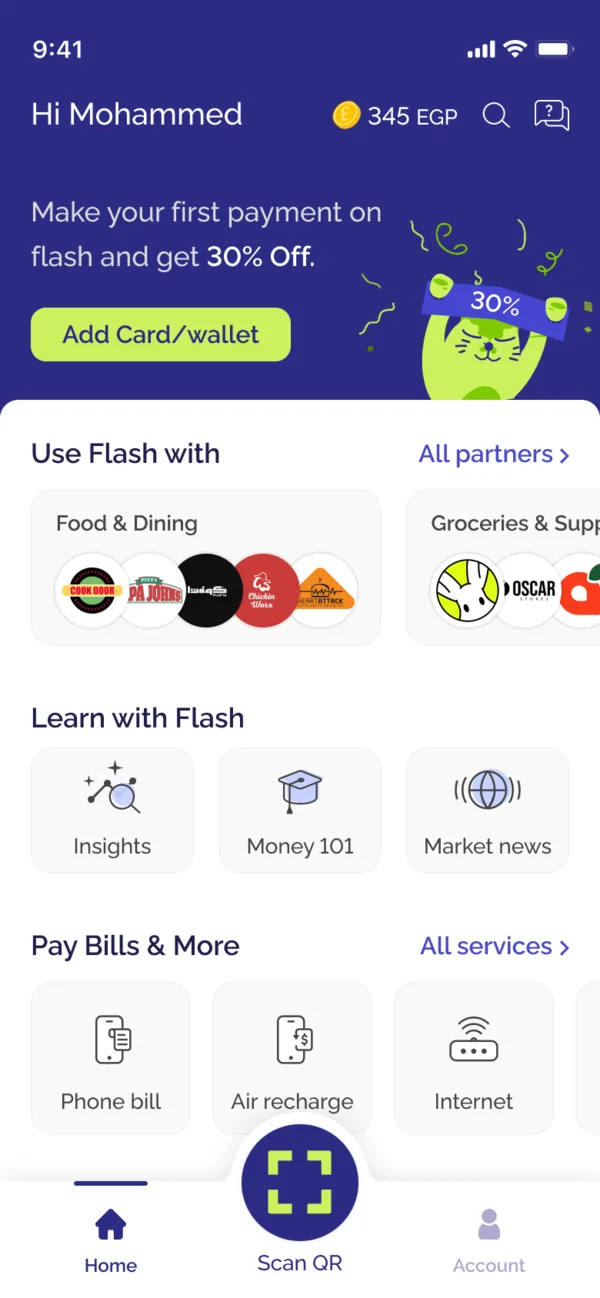
I designed the offers page, the locked offers you open by using the first one, and the sheet with each offer's details and terms. New users also see a welcome voucher on the home page: 30% off their first payment.
After you pay
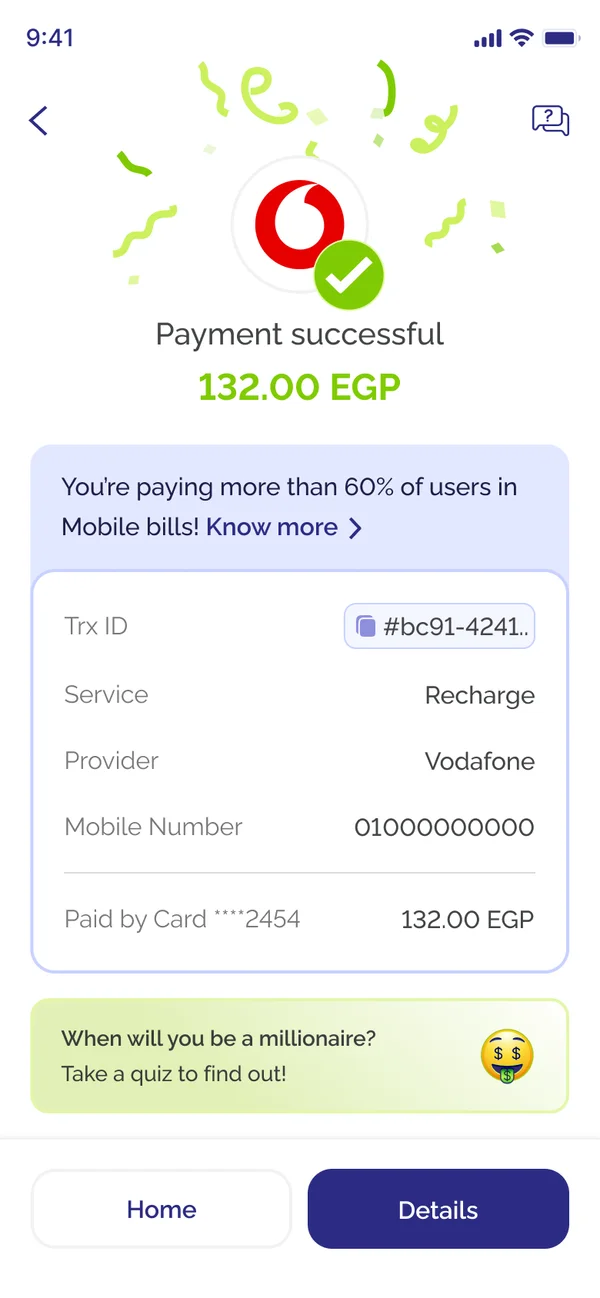
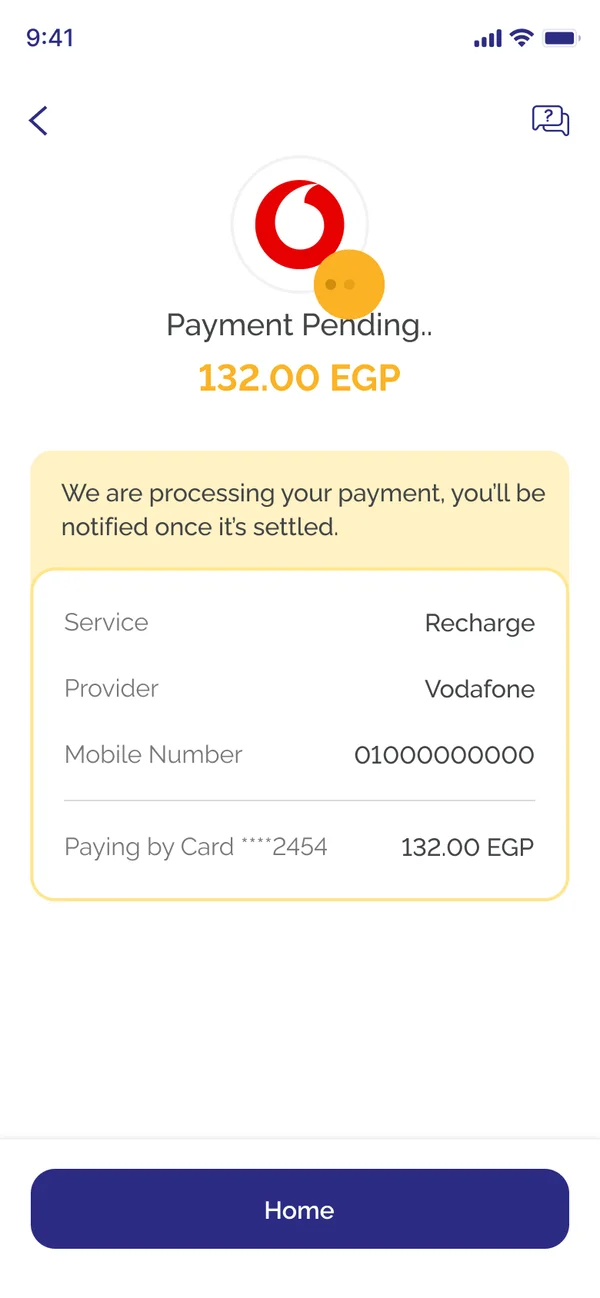
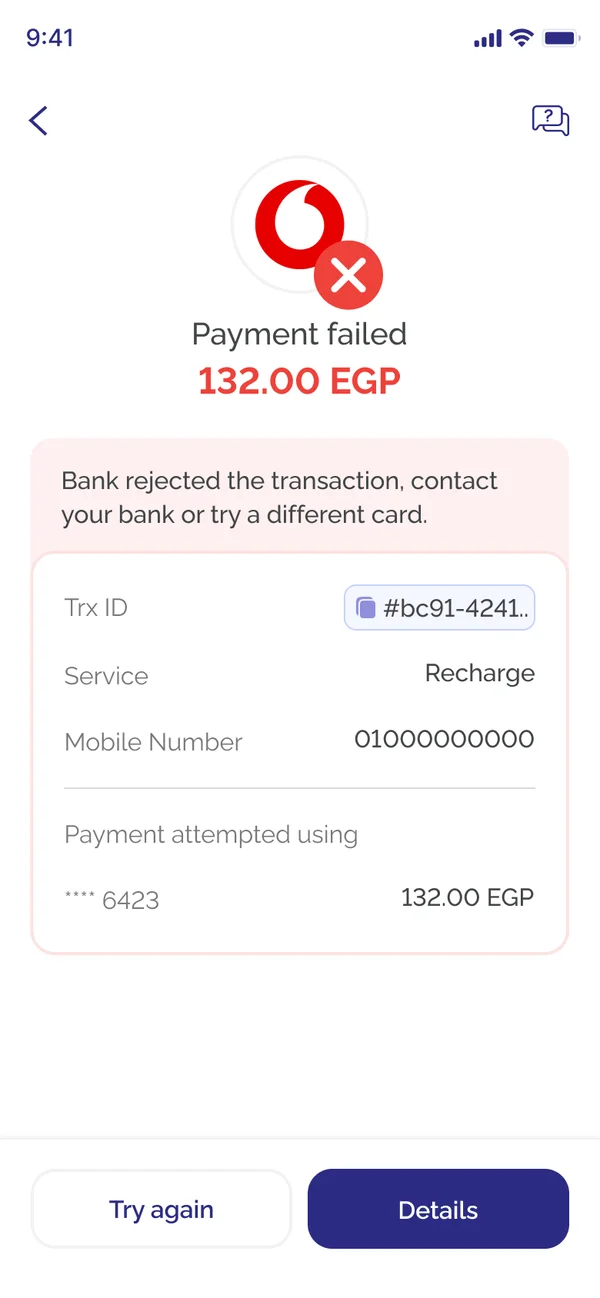
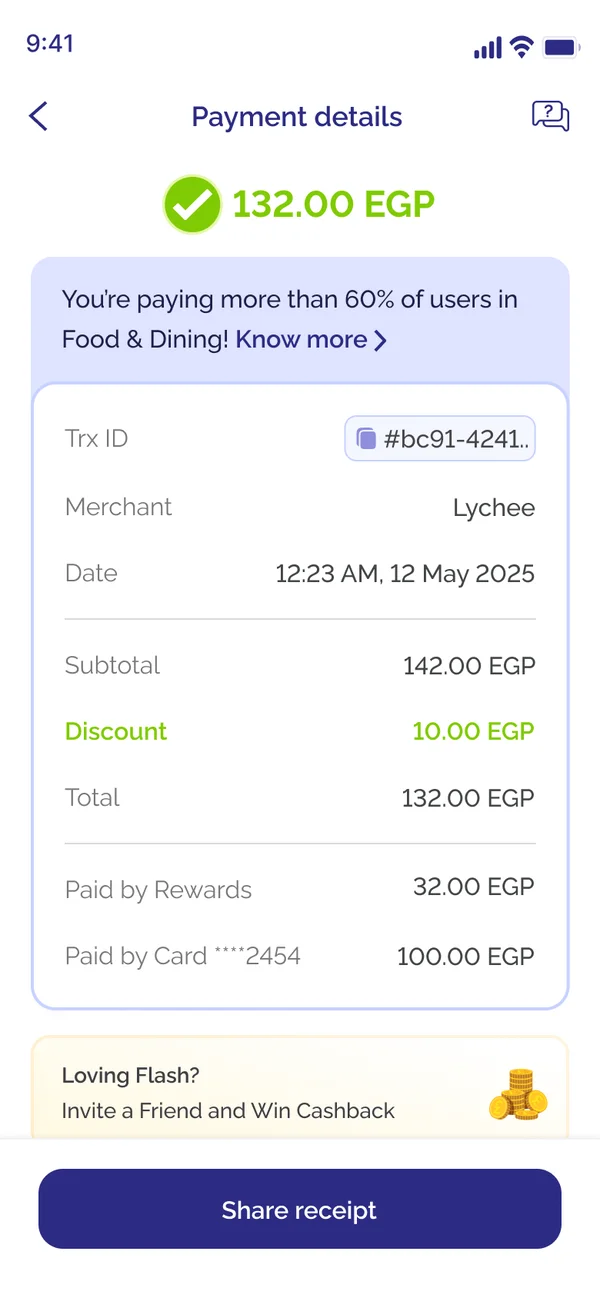
I designed the screens that come after a payment. The main idea was visibility: you know at first glance whether a payment went through, is pending, or failed. When something goes wrong, the error message tells you the next step. The success screen can also carry a short line, like how your bill compares with other users'.
Adding an expense
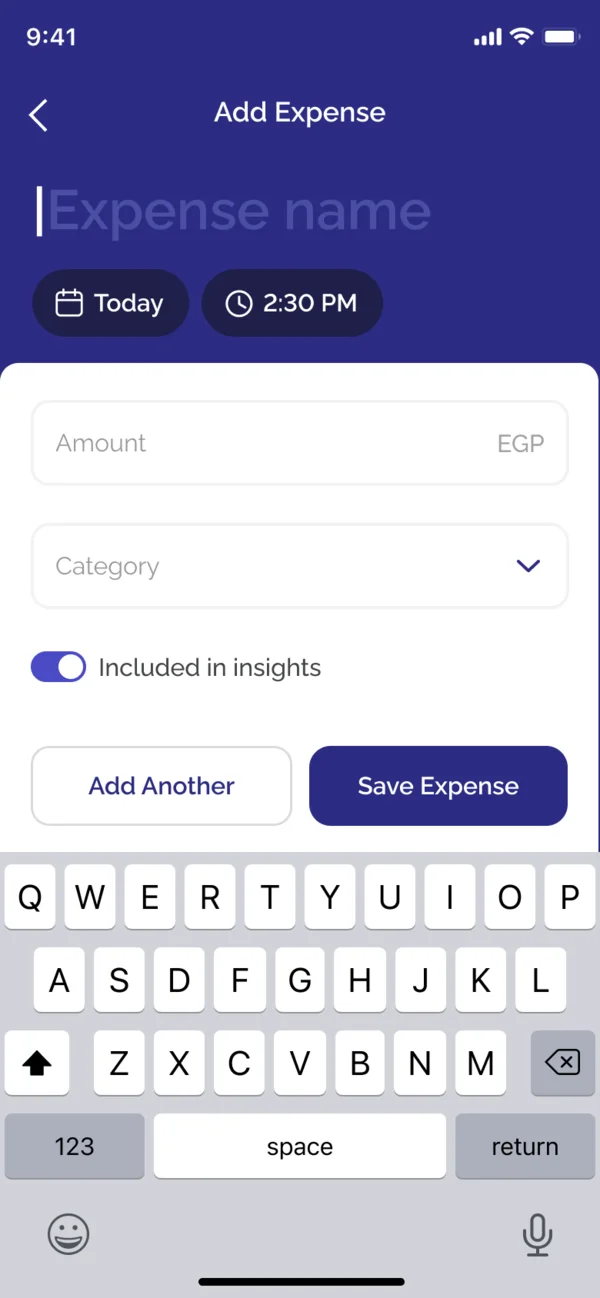
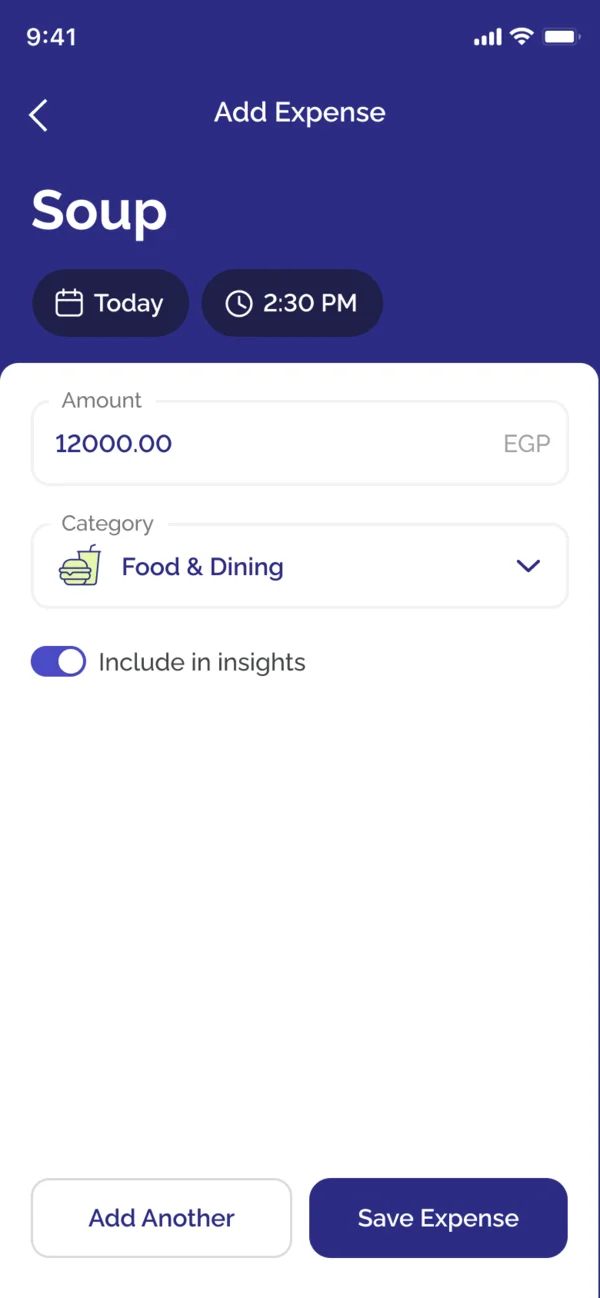
Flash keeps track of what you spend. Payments made with Flash are added on their own, and you add the rest by hand. I redesigned the Add Expense page around an idea of mine, a category map: as you type the expense's name, it picks the category, so "Soup" lands in Food & Dining before you reach the field.
I designed it, tested everything in Floto, then built the whole thing myself. I opened the PR, and the team reviewed it, the math included.
 Typing the name
 The category, filled in
Gold & Rates
Flash showed live gold prices before I started on it. I suggested adding their history. In Egypt there was no record of past gold prices and no chart of how gold has done over time, and the price here differs from the world price because of local markups and the exchange rate.
So I tracked the price myself, month by month, for the last three years, and compiled it into a dataset the team uploaded. Then I designed the chart. Gold & Rates now shows gold for each karat and exchange rates against the pound, each with its history, in English and Arabic.
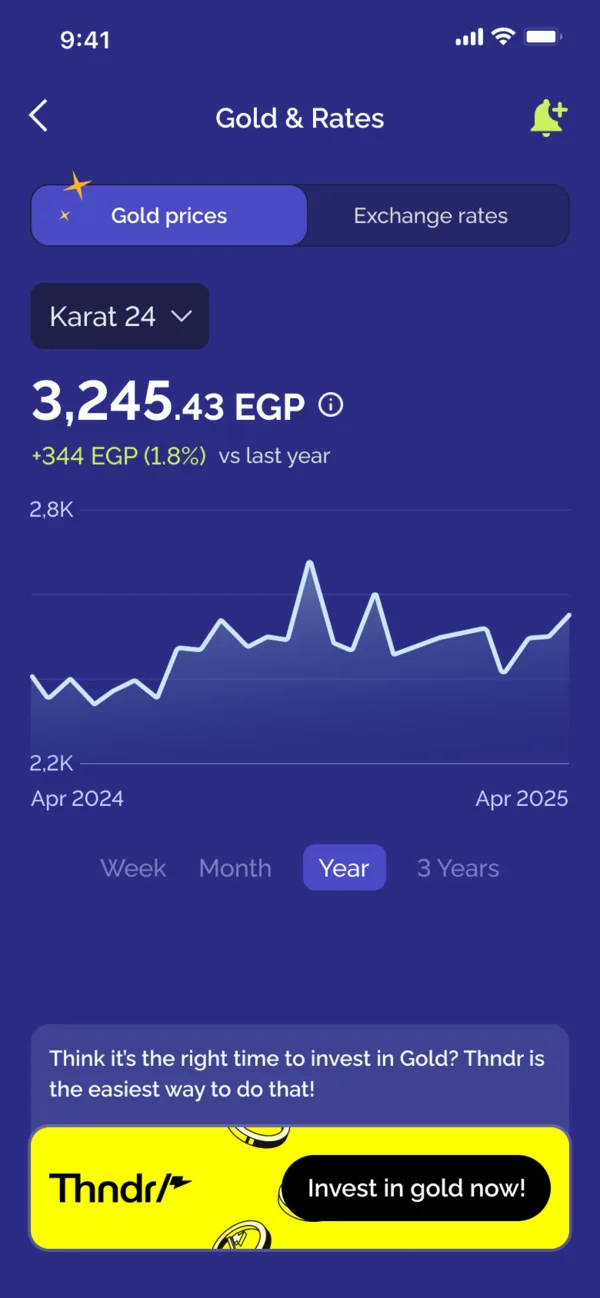
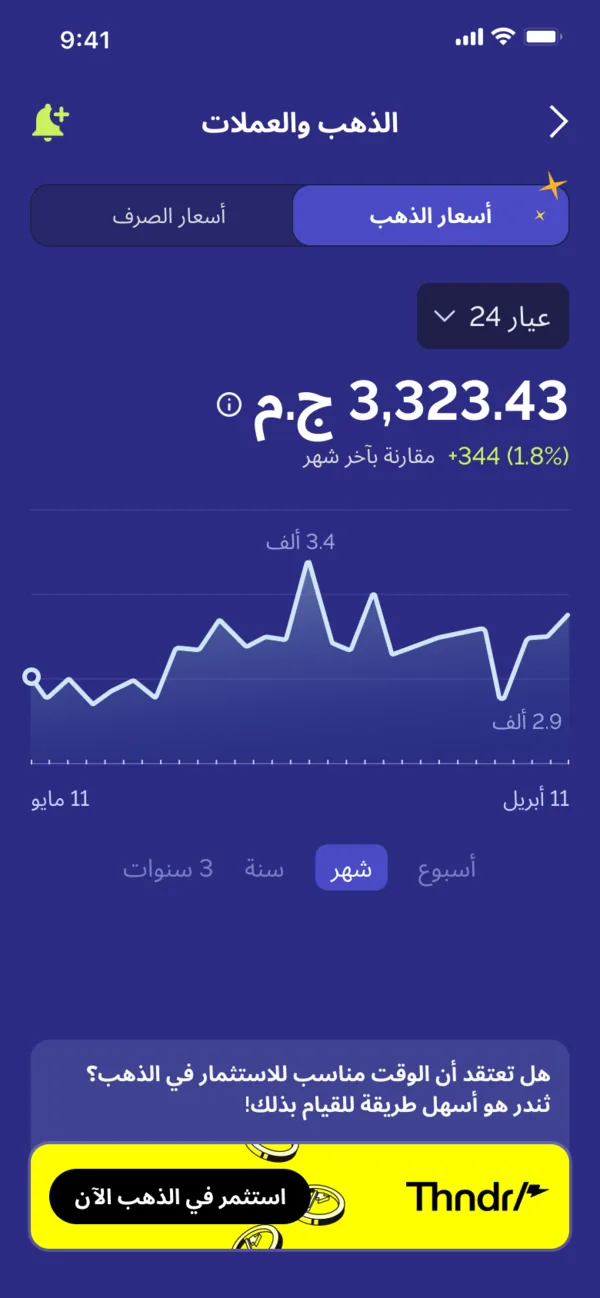
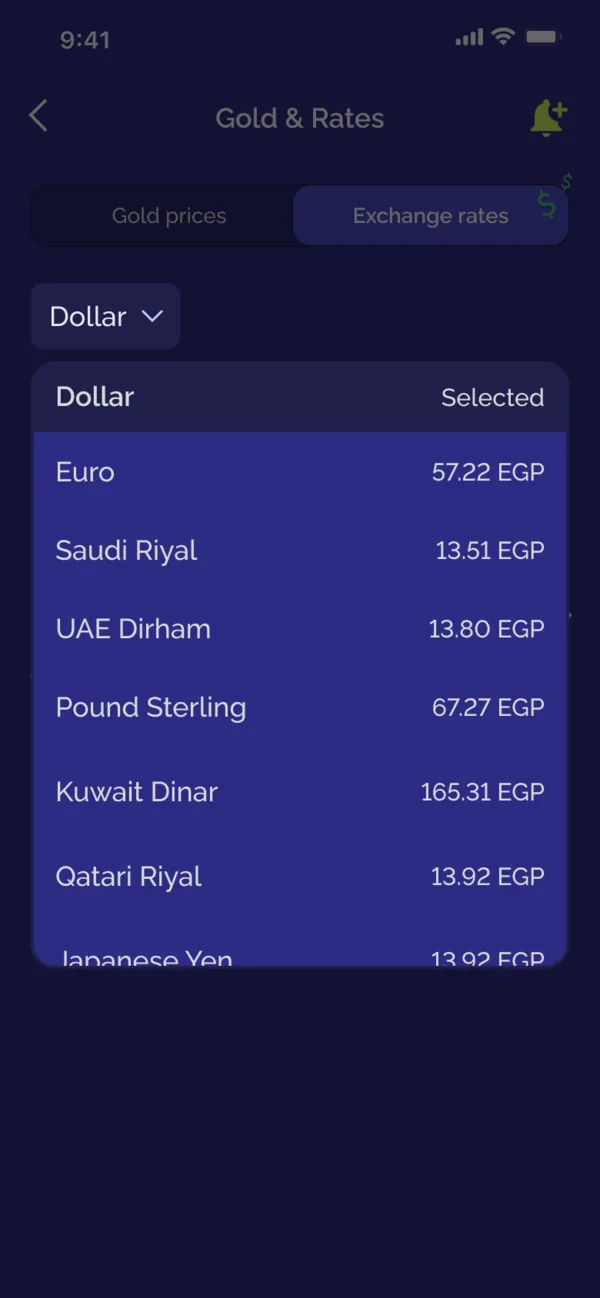
Later I gave it a refresh: people can now choose between a list of every rate and a chart of how one has moved.
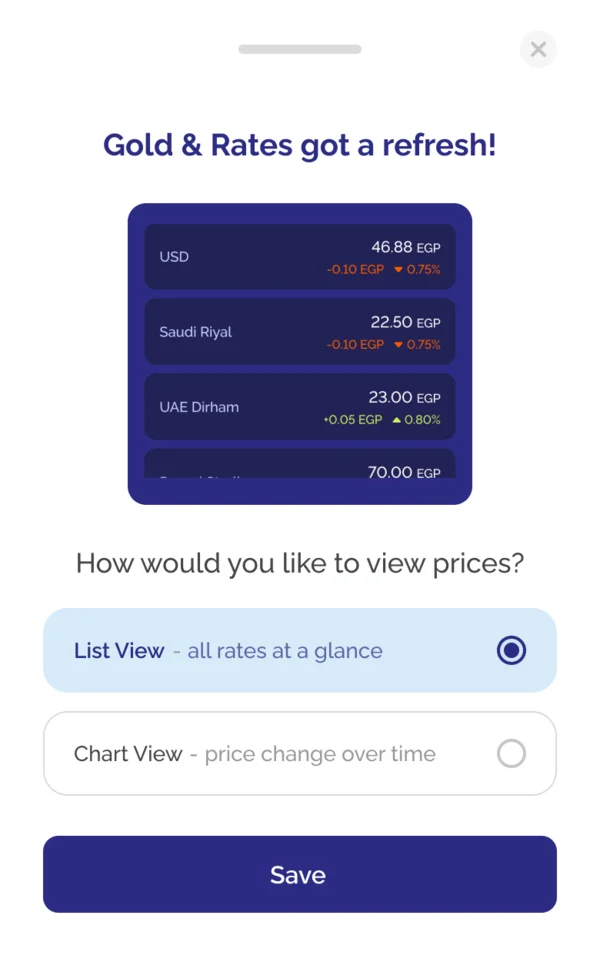 List view
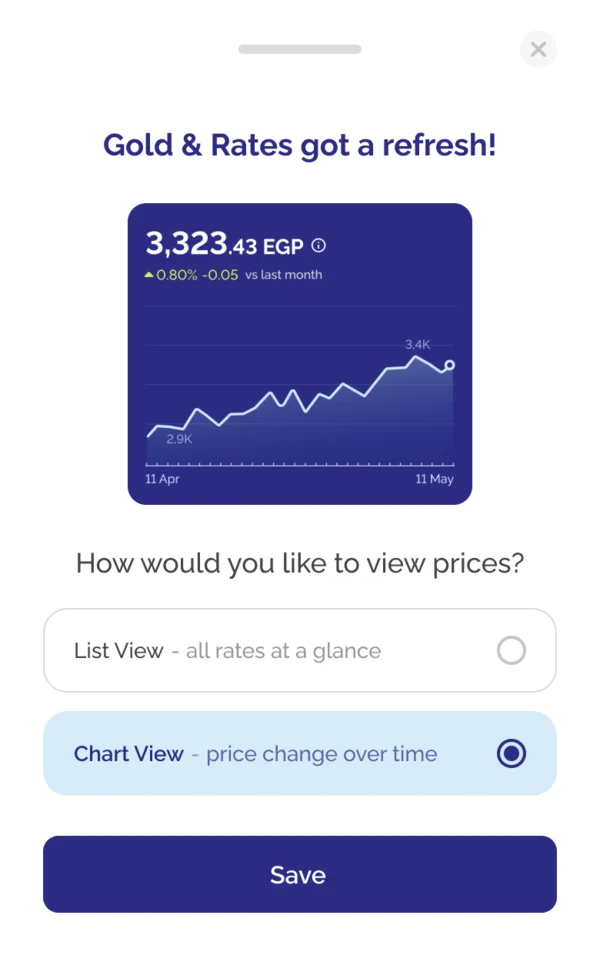 Chart view